AppForge Solution - Webfejlesztés, Appfejlesztés, MI Fejlesztés
Python · LangChain · LangGraph · AI Agents

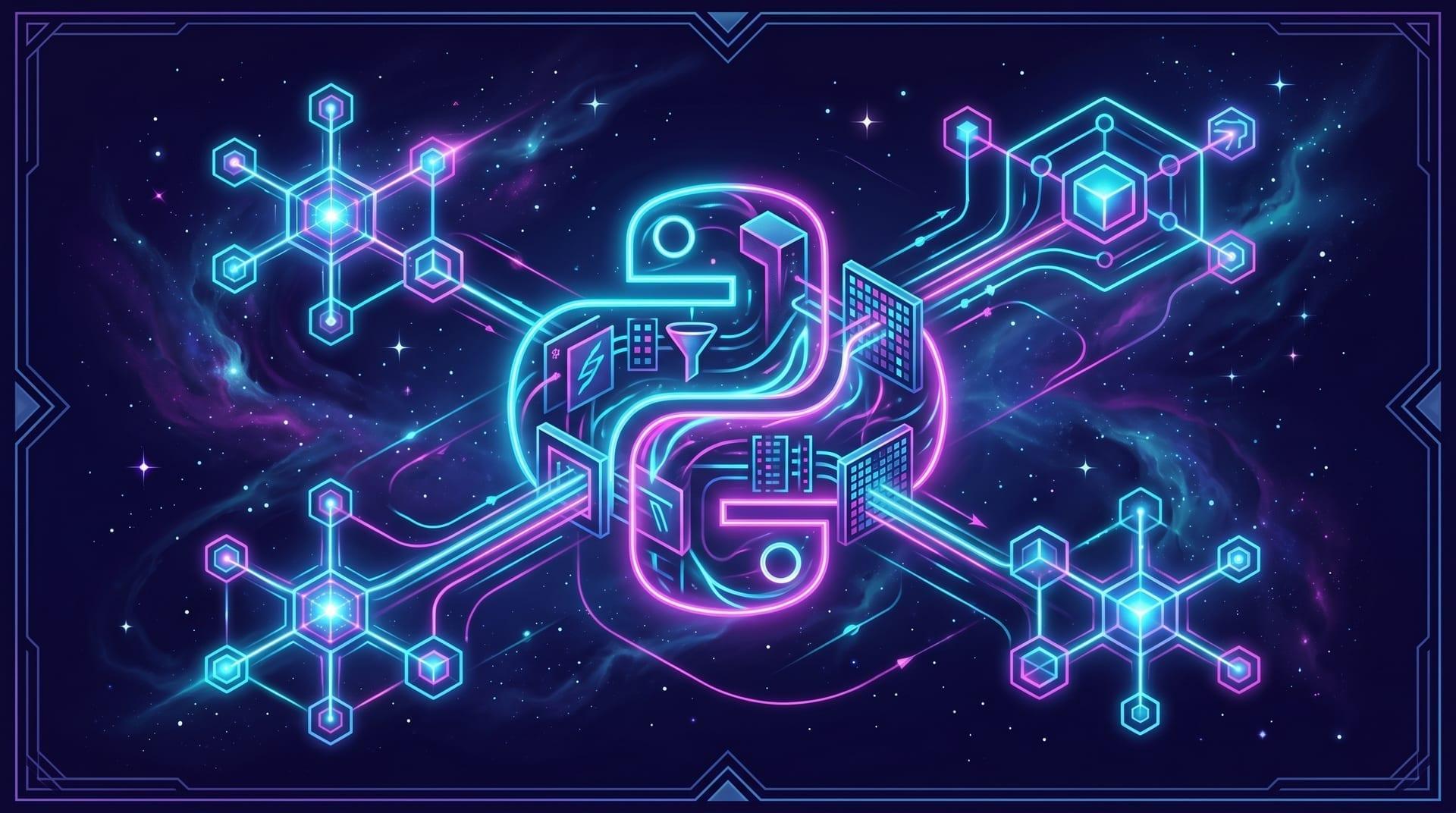
Enterprise process automation on Python + LangChain

AI agents and integrations built in your own Python codebase. LangChain + LangGraph + FastAPI + Temporal - production-grade, monitored, version-controlled agentic systems. We don't sell no-code platforms; we deliver scalable, audit-ready software. ROI typically 3-9 months.

Custom Python codebase LangChain + LangGraph agentic stack Multi-system integration 3-9 month ROI

Trusted Partners

Proud to work with leading companies

Common use cases

What do we automate most often?

Eight concrete use cases we ship for almost every client. The full list is longer - these have the fastest payback.

Invoice processing

Auto-recognition of incoming PDF / email / e-invoices, push to accounting (QuickBooks, Xero, Zoho), categorisation, approval workflow. ROI: 1-3 months.

Lead routing & CRM sync

Web form → CRM (HubSpot, Pipedrive, Salesforce), lead scoring, automatic sales rep assignment, follow-up email sequence. Slack / Teams notifications.

Data sync between systems

E-commerce → ERP → accounting, or CRM → email marketing → support - any combination. Two-way or multi-way sync with error handling.

Document processing (OCR + AI)

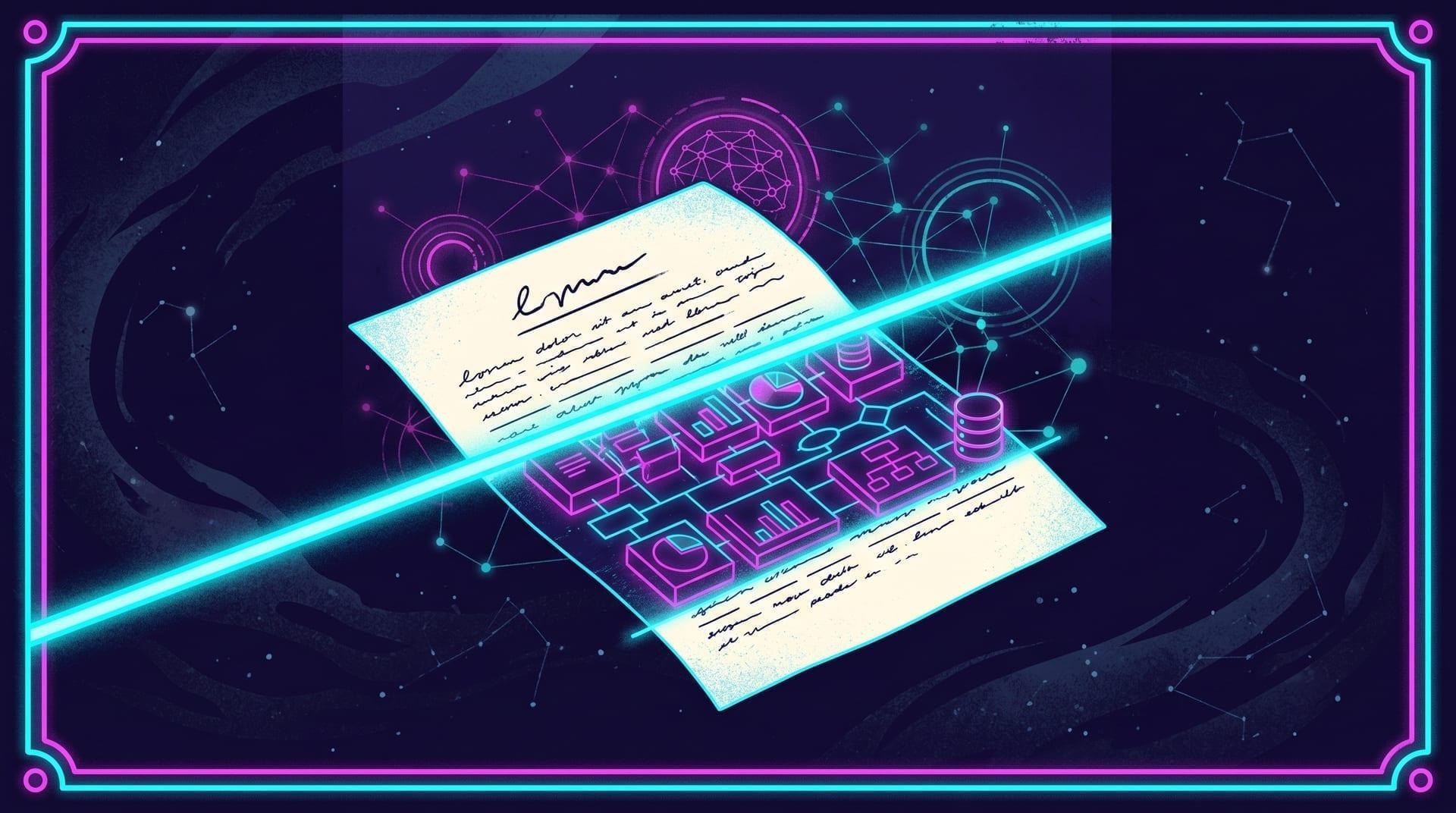
Auto-recognition, classification, and key data extraction from contracts, reports, invoices, orders. AI-powered understanding, not just OCR.

Customer support automation

Inbound ticket classification, basic Q&A via RAG-based chatbot, escalation to human agent when needed. Reduces support volume by 40-60%.

Reporting & dashboards

Auto-aggregation of data (ERP, GA4, ad platforms, CRM), weekly / monthly executive reports. Power BI / Metabase / Looker dashboards.

HR onboarding / offboarding

New hire: auto-provisioning of accesses (Google Workspace, Slack, GitHub, ERP), equipment requests, training scheduling. Reverse on departure.

Enterprise-grade, custom-coded - not no-code

We do not sell no-code platforms. Flows are written in Python with LangChain / LangGraph, behind FastAPI, running on Temporal or Celery. Versioned, unit-tested, observable - exactly like any other enterprise application. For long-running, decision-heavy, audit-bound processes.

How We Work

Our Process

Meticulous planning, seamless execution, and creative problem-solving -- that's how we achieve remarkable results.

01

Concept

No cookie-cutter solutions here. We map out your business goals, market landscape, and competition, then build a strategy designed to deliver measurable results.

02

Design

Wireframes, prototypes, and UI/UX designs built on real user insights. Every click, every layout is engineered to maximize conversions and engagement.

03

Development

Agile development with cutting-edge technologies, weekly demos, and full transparency. You'll always know exactly where your project stands.

04

Testing

Automated and manual testing across every platform and browser. Nothing goes live until it's been tested to the breaking point and passed with flying colors.

05

Launch & Support

Launch day is just the beginning. Monitoring, performance optimization, and ongoing support ensure your solution gets better every single day.

Tools

Process automation - picking the right tool

We don't favour one tool. We pick the right tool for the job - often 2-3 tools in a single project.
LangChain + LangGraph (Python)

Our primary agentic stack. Multi-step, state-machine-modelled agent flows. Tool-calling, retrievers, memory - all in code, tested, traced via LangSmith / Langfuse.

FastAPI + Pydantic

The automation layer's API. Typed input/output with validation. CI/CD-integrated, deployed on Docker / Kubernetes. Scalable and observable.

Temporal / Celery + Redis

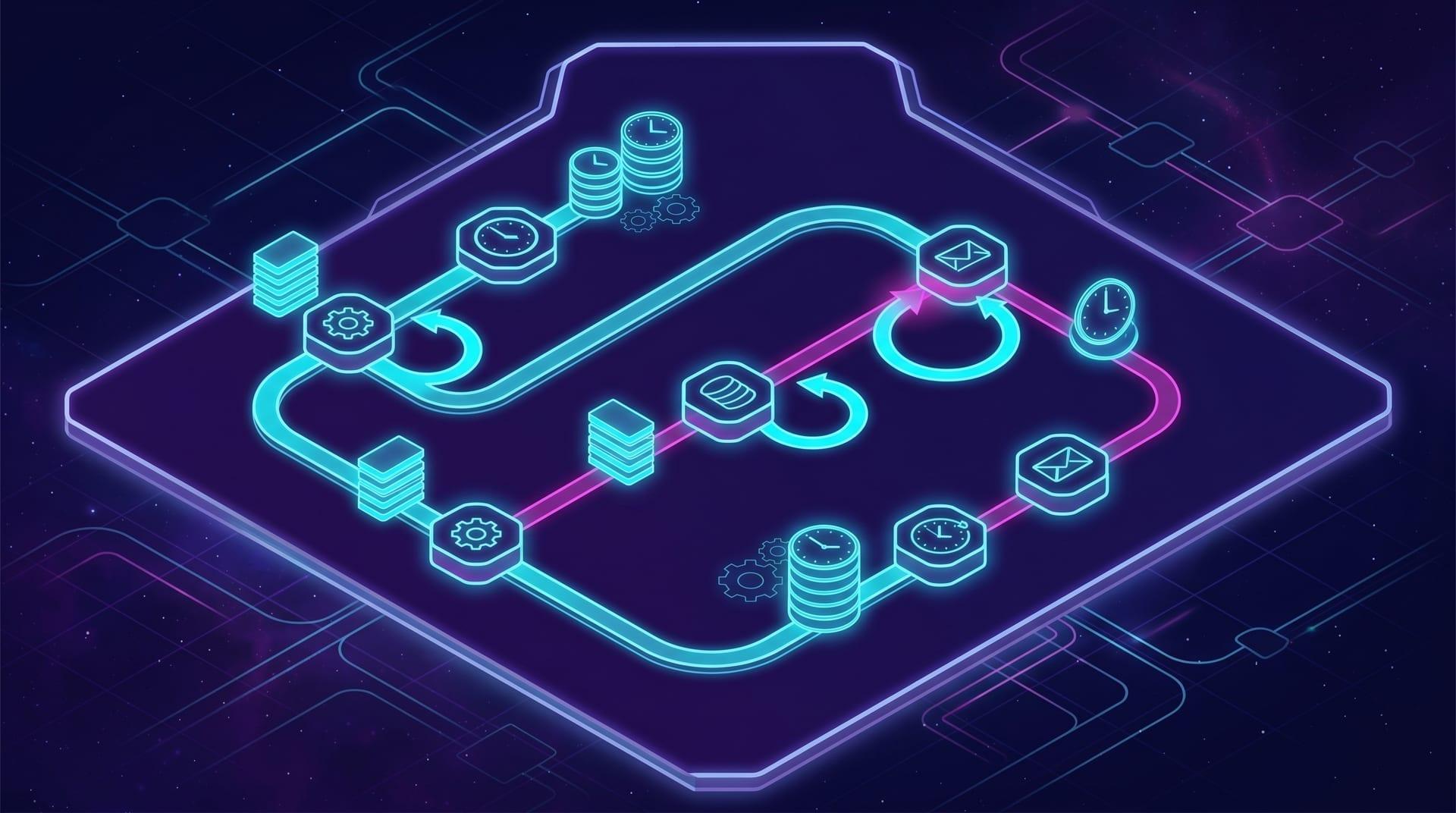
Orchestration for long-running, retry-heavy flows. Idempotent tasks, exponential backoff, durable execution - built for production.

AI Agents (LangGraph, CrewAI, AutoGen)

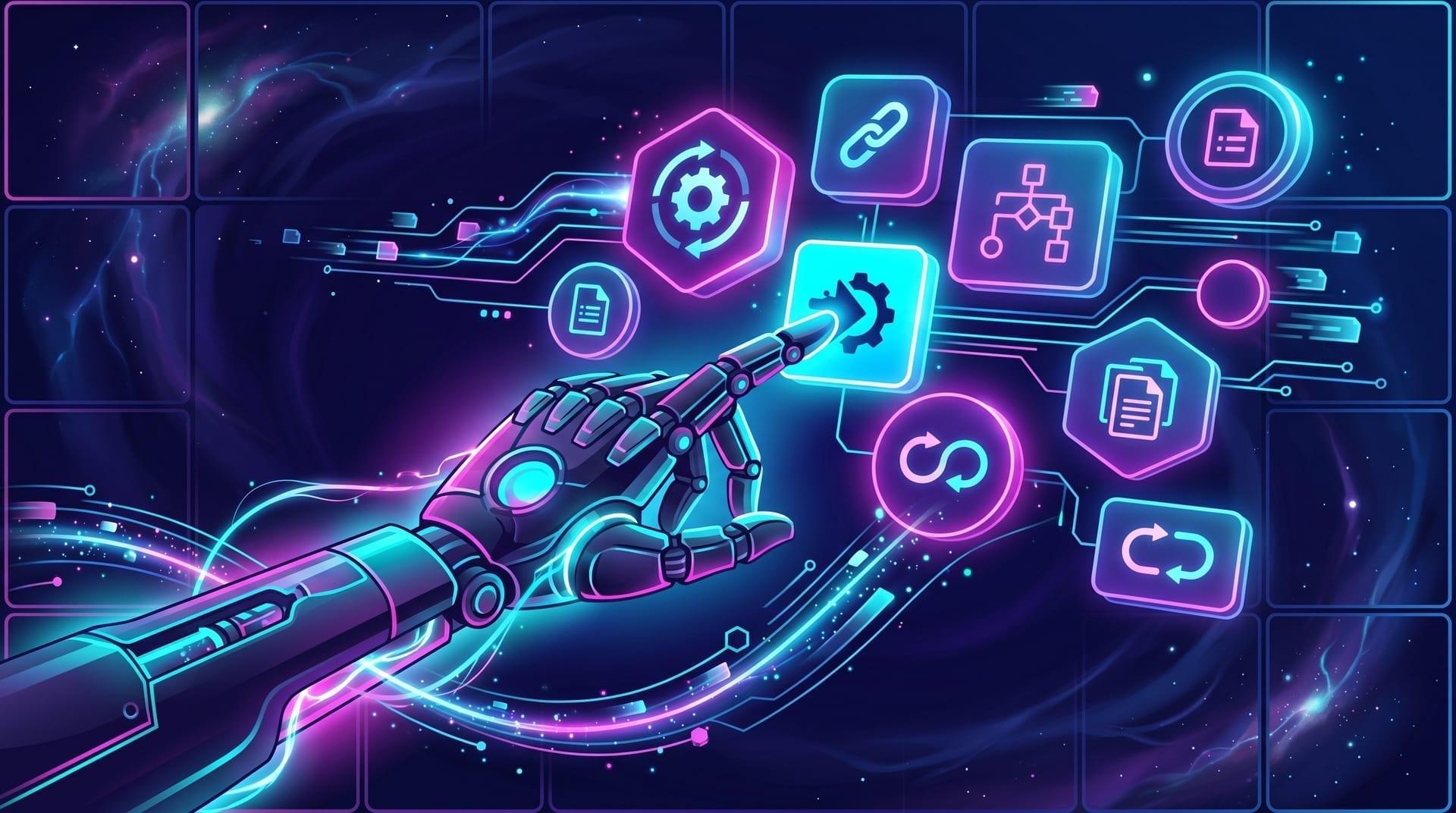
Autonomous agents for complex tasks: quote generation, customer classification, document analysis, research agents. In your own Python codebase, not on a no-code platform.

OCR + Document AI (Azure DI, Tesseract, layoutLM)

Structured extraction of invoices, contracts, forms. Output validated by an LLM, edge cases routed to human review.

RPA (only where unavoidable)

For legacy, API-less systems (SAP GUI, banking terminals) - once an API opens up, we replace it. We treat RPA as a transitional solution, not a target.

FAQ

Process automation - Frequently Asked Questions

What is process automation?

Process automation is using software to handle repetitive manual workflows automatically. Typical examples: incoming invoice processing, lead routing to CRM, data sync between systems, document classification, report generation. We build enterprise-grade, custom-coded systems: Python + LangChain + LangGraph agentic flows, behind FastAPI, running on Temporal - versioned, monitored, observable. We do not sell no-code platforms; we deliver production-grade, scalable, audit-ready software.

How much does a process automation project cost?

Simple 1-3 step workflow (e.g. form → CRM → email): €250–€1,300. Mid-complexity, multi-system integration with error handling: €1,300–€6,500. AI-driven complex automation (e.g. invoice processing with OCR + AI classification + approval flow): €6,500–€26,000. Maintenance €80–€400/month (API change tracking, monitoring). ROI typically 3-9 months.

What's the difference between RPA and AI automation?

RPA (Robotic Process Automation) runs a "robot" that clicks like a human in an existing, often legacy system (SAP GUI, banking terminal, Excel). API-less, "screen-level" automation. AI automation works with actual understanding - comprehending an incoming document, categorising emails, generating quotes. The modern approach: API integration where possible (fast, reliable) → AI where decisions are needed → RPA only when no API exists. RPA is often a temporary solution while waiting for an API.

Why Python + LangChain instead of n8n / Make / Zapier?

No-code platforms (n8n, Make, Zapier, Power Automate) are fine for prototypes and trivial integrations, but they fail in three ways at enterprise scale: (1) not version-controlled, not unit-testable - every change is a risk; (2) limited scalability and observability - they break at 100k+ flows / day; (3) AI integration is shallow, agent logic can't be orchestrated with precision. Our approach: Python + LangChain / LangGraph + FastAPI + Temporal - everything in code, in Git, with CI/CD and monitoring. Same quality bar you'd expect from an ERP or CRM system. Long-term, this is the responsible choice.

How do I start a process automation project?

(1) PROCESS AUDIT: list weekly recurring manual tasks and the time they consume. (2) PRIORITISE: pick the 3 most time-consuming, error-prone processes. (3) MVP AUTOMATION: start with one, with a quick (1-2 week) automation pilot - prove the concept. (4) MEASURE: time saved, error reduction, ROI. (5) SCALE: build on the success. We offer a free audit - 30 minutes of questions and we tell you which 3 processes to start with.

Can you integrate with our existing software stack?

Yes. Direct integrations with QuickBooks, Xero, Zoho, Stripe, HubSpot, Pipedrive, Salesforce, Shopify, WooCommerce, banking APIs, NAV (Hungary), KSeF (Poland), SAF-T systems, MES, and many more. When no official API exists, we use custom scrapers or RPA. Typical workflow example: incoming invoice (email / PDF) → OCR + AI recognition → accounting system → approval workflow → automated payment instruction.

What is an AI agent in automation?

An AI agent is an autonomously-deciding software unit that receives a goal (e.g. "process this invoice") and breaks the goal into steps, decides which tool to use, and executes. Traditional automation: "if X then Y". AI agent: "here is a task, solve it as you see fit". Typical use: complex document processing, customer escalation, quote generation, research. Frameworks: LangGraph, CrewAI, AutoGen - we work with all three.

What's the difference between process automation and ERP development?

An ERP is a closed, integrated system that consolidates your entire operation (sales, inventory, finance, HR) into one. Process automation builds bridges between existing systems - e.g. e-commerce ↔ accounting ↔ inventory. Often the right path is ERP development AND process automation: the ERP is the core, but a few external tools (e-commerce, marketing tool, BI dashboard) are connected via automation. We deliver both - often sequentially, sometimes in parallel.
AI capabilities

How AI fits into this solution

What AI can do, how to integrate it, what to comply with - and how to keep your data on-prem.

What AI can do here

  • Document automation

    Incoming invoices, contracts, POs processed automatically with OCR + LLM extraction.

  • AI agents (agentic workflow)

    Multi-step decision flows: email analysis → CRM update → reply draft → human approval → send.

  • Natural-language triggers

    User describes the goal in plain English ("send weekly report on B-tier leads"), and the automation is built.

  • Self-healing flows

    When an automation breaks, AI tries to interpret the error and propose a fix / retry.

How we integrate it

  • LangChain + LangGraph + FastAPI

    Python-based agentic stack - your own codebase, versioned, unit-testable, monitored. Long-running flows on Temporal or Celery + Redis. Not a no-code platform: an enterprise-grade codebase.

  • Hybrid model

    Deterministic steps where you need them (math, integration), AI where interpretation or judgement matters.

  • Audit log

    Every agent decision, prompt, and output replayable - required in regulated industries.

Compliance

  • GDPR

    Personal data is processed only on a documented legal basis. Data minimisation, purpose limitation, and audit trail enforced by design.

  • EU AI Act

    Risk-based classification of every AI use case (minimal / limited / high risk). Mandatory transparency, human oversight, and CE-style conformity for high-risk systems.

  • NIS2

    In essential and important sectors AI must follow security-by-design: access control, logging, incident reporting, supply-chain risk for any model provider.

  • ISO 27001 / SOC 2

    When required: ISO 27001 / SOC 2-aligned controls, including key management, RBAC, audit, vulnerability management.

Local / on-prem deployment

  • Ollama / llama.cpp

    Open-weight models (Llama 3.x, Mistral, Qwen, Gemma) running on your own GPU server or even CPU. Zero data sent to third parties.

  • vLLM / TGI

    Production-grade inference servers for self-hosted endpoints. Concurrent users, streaming, function calling supported.

  • Sovereign cloud

    For organisations without on-prem GPU: deployment on EU / Hungarian sovereign cloud (e.g. dedicated tenant), with data residency contracts.

  • Hybrid

    Sensitive content always local; for non-sensitive batch tasks frontier models (Claude, GPT) via DPA-backed API where allowed.

Data security model

  • No training on your data

    Whether self-hosted or vendor API, we contractually exclude your data from any training set.

  • PII redaction before prompt

    Automatic PII detection and masking before any prompt leaves your perimeter - pseudonymisation as a hard rule.

  • Per-role access

    Every AI surface uses your existing IAM (Entra ID / Keycloak / Okta) - the AI only sees what the user is allowed to see.

  • Full audit

    Every prompt, response, and tool call logged with user, time, and source - replayable on demand.

How it connects

A Python + LangChain agentic stack rarely stands alone - it is part of a wider back-office or integration project.

The most common pattern: automation reads customer history from a CRM and works against financial data in a custom ERP. Inbound documents generate ERP orders and CRM activities.

When data has to be pulled from / written to many systems, a system integration layer is the foundation. For NIS2-scope organisations, the entire flow lives under a NIS2-compliant architecture.

Contact

Get in Touch

Tell us about your project and we'll respond within 24 hours!

Additional details (optional)

Thank you! We'll get back to you soon.

We usually respond within 24 hours.

CEO

Boncz Balint

Office

Budapest, Hungary

Let's Talk Live!

Book a free 30-minute consultation where we discuss the details of your project.

Book a Call