AppForge Solution - Webfejlesztés, Appfejlesztés, MI Fejlesztés
Enterprise Resource Planning · multi-language

Custom ERP Development built around your processes

Custom ERP development for SMBs and enterprises across Europe. A SAP / Microsoft Dynamics / NetSuite alternative - modern web-based, no per-user licence trap, source code yours. Localised for Hungarian (NAV) and other EU jurisdictions. 70% lower 5-year TCO than off-the-shelf systems.

ERP MVP from €20,000 No per-user licence You own the codebase Multi-jurisdiction tax compliance

Trusted Partners

Proud to work with leading companies

Why custom ERP

Why custom ERP instead of SAP, Dynamics, or NetSuite?

Off-the-shelf ERP looks cheaper on day 1. Not on year 5. Escaping the licence trap is easier now than later.

Custom ERP - no SAP licence trap

SAP, Microsoft Dynamics, Oracle cost €130–€500/user/month. A custom ERP is paid for once, then it's yours - no recurring licence. For a 50-person company, the break-even is usually within year one.

Built around your processes

Off-the-shelf ERPs (SAP, Dynamics, NetSuite) enforce 'standard' processes - your company has to adapt to them. A custom ERP works the other way: the system adapts to your processes, not the reverse.

Modern web-based, mobile-friendly

Not a 2010-era Windows client - a modern browser-based UI (Astro / Next.js / React). Works from any device (laptop, tablet, phone) with offline capability and automatic sync.

Connects to everything

Webshops (Shopify, WooCommerce), accounting software, CRMs (HubSpot, Pipedrive, Salesforce), B2B portals, banking APIs, custom REST / GraphQL / SOAP integrations. Anything with an API can talk to your ERP.

Localised for your jurisdiction

For Hungarian operations: NAV Online Számla 3.0, HUF VAT categories, EU OSS settlement, EKAER, Hungarian POS integration. For other EU markets: country-specific tax rules, e-invoicing, and reporting baked in.

70% lower 5-year TCO

For a 30-person company, SAP Business One / MS Dynamics 365 runs ~€130–€210k over 5 years (licence + implementation + maintenance). A custom ERP: €40–€80k upfront, ~€8–€15k/year maintenance. 5-year total: ~€80k vs €210k.

How We Work

Our Process

Meticulous planning, seamless execution, and creative problem-solving -- that's how we achieve remarkable results.

01

Concept

No cookie-cutter solutions here. We map out your business goals, market landscape, and competition, then build a strategy designed to deliver measurable results.

02

Design

Wireframes, prototypes, and UI/UX designs built on real user insights. Every click, every layout is engineered to maximize conversions and engagement.

03

Development

Agile development with cutting-edge technologies, weekly demos, and full transparency. You'll always know exactly where your project stands.

04

Testing

Automated and manual testing across every platform and browser. Nothing goes live until it's been tested to the breaking point and passed with flying colors.

05

Launch & Support

Launch day is just the beginning. Monitoring, performance optimization, and ongoing support ensure your solution gets better every single day.

ERP modules

ERP modules - tailored to your industry

The 8 most common ERP modules we ship. Not all are required for everyone - at the kickoff workshop we decide your priority order.

Sales / CRM

Lead pipeline, quoting, orders, opportunity tracking, customer journey

Inventory / Warehouse

Multi-warehouse, serial numbers, expiry, bin locations, stocktakes, barcode scanners

Procurement

Suppliers, purchase orders, approval workflow, goods receipt, invoice matching

Manufacturing / MES

BOM, production orders, capacity planning, machine data, MES integration

Finance / Accounting

GL, AR/AP, bank reconciliation, cash flow, accounting software sync

HR / Payroll

Time tracking, leave management, attendance, export to payroll system

Project management

Project planning, time logging, cost control, milestones, Gantt, client billing

Reporting / BI

Custom dashboards, Power BI / Metabase / Looker integration, KPI monitoring, anomaly detection

Tech stack

Modern tools for ERP development

Next.js / ReactNode.js / BunPostgreSQLPrisma ORMTypeScripttRPC / GraphQLAWS / Hetzner / CloudflareNAV Online Számla 3.0Stripe / banking APIs
FAQ

Custom ERP development - Frequently Asked Questions

How much does custom ERP development cost in 2026?

Starting at €20,000 for a 1-2 module MVP (sales + invoicing, ~10 users). Mid-complexity ERP with 5-7 modules (sales, inventory, finance, HR, projects): €40–€80k. Enterprise ERP with manufacturing, MES integration, BI: €80–€260k. Yearly maintenance is 15-25% of the base cost (new features, regulatory updates, security). 5-year TCO for 30-person company is ~€80k, vs SAP Business One at ~€130–€210k.

How long does custom ERP development take?

A 1-2 module MVP: 3-5 months. Mid-complexity 5-7 module system: 6-12 months. Enterprise system with manufacturing and integrations: 12-24 months. We work in 2-week agile sprints - usable prototype from month 2. Go-live is typically rolled out module by module to avoid downtime.

What is an ERP system and why do I need one?

An ERP (Enterprise Resource Planning) system is software that manages all your business processes in one place: sales, inventory, procurement, manufacturing, finance, HR, projects. Without ERP, companies typically run 5-15 separate tools (Excel, accounting, warehouse, CRM, etc.) - data is duplicated, errors compound, and reporting takes days. A well-designed ERP keeps all data in one place in real time - leadership sees the company's actual state instantly.

What's the difference between custom ERP and SAP / Microsoft Dynamics?

SAP / MS Dynamics / Oracle / NetSuite are off-the-shelf systems with predefined processes that your company must conform to. Licence costs €130–€500/user/month (5 years, 30 users = ~€130–€260k). Custom ERP is built around your processes, no monthly licence fees, source code is yours - no vendor lock-in. The trade-off: longer initial development (6-12 months vs 2-4 months implementation). For 30-300-person companies, custom typically wins on TCO.

Can you integrate with our existing systems?

Yes. Typical integrations: accounting software, payroll systems, e-commerce platforms (Shopify, WooCommerce, Magento, BigCommerce), CRMs (HubSpot, Pipedrive, Salesforce, Zoho), banking APIs, e-invoicing systems (NAV in Hungary, KSeF in Poland, SAF-T elsewhere), MES, PLCs. Integrations via REST / GraphQL / SOAP / EDI / SFTP. A typical integration runs €600–€2,500; complex MES or banking can reach €3–€10k.

Where does the ERP run - on-premise or cloud?

Both options are available. Cloud (Cloudflare, AWS, Hetzner, EU data centers): lower entry cost, automatic scaling, we handle ops (€130–€800/month). On-premise (your server): full data sovereignty, one-time infra cost (€8–€26k), your IT team operates it. Hybrid is also common - sensitive data on-prem, public-facing UI in cloud.

What if we want our in-house team to take over later?

No vendor lock-in. Full source code is yours (Git repo) plus documentation (architecture, deploy, ops guides). We onboard your team and hand over infra credentials. Optional part-time mentor / support contract during transition. We use mainstream tech (Next.js, PostgreSQL, TypeScript) - easy to hire for.

Can you build an ERP for a manufacturing company (MES, production)?

Yes. Manufacturing ERP / MES is one of the most complex projects - BOM management, production orders, capacity planning, machine data acquisition (Modbus, OPC UA, MQTT), shop floor terminals, barcode/RFID, OEE/KPI monitoring, traceability. Typical manufacturing ERP project: 12-24 months, €80–€210k. We have experience in automotive, FMCG, and precision manufacturing.
AI capabilities

How AI fits into this solution

What AI can do, how to integrate it, what to comply with - and how to keep your data on-prem.

What AI can do here

  • Invoice and document processing

    Extract incoming invoices, delivery notes, and POs from PDF/email with OCR + LLM. NAV-online integration, automatic GL coding suggestions.

  • Inventory and demand forecasting

    Predictive model trained on historical data for weekly/monthly demand. Procurement suggestions based on lead time and minimum stock.

  • Financial anomaly detection

    Unusual transactions, duplicate invoices, wrong tariff codes flagged automatically - with human-in-the-loop approval.

  • Internal ERP assistant (chat)

    Natural-language access to your ERP knowledge: "How many open orders do we have for partner X?" - RAG over your own ERP data.

How we integrate it

  • RAG over ERP data

    Vector database (Qdrant / pgvector) built on ERP records. The model only answers from your own data - no external hallucination.

  • Function calling

    AI agent calls ERP APIs directly - create order, generate report, look up partner. Every call audited and bound to permissions.

  • Inbound document pipeline

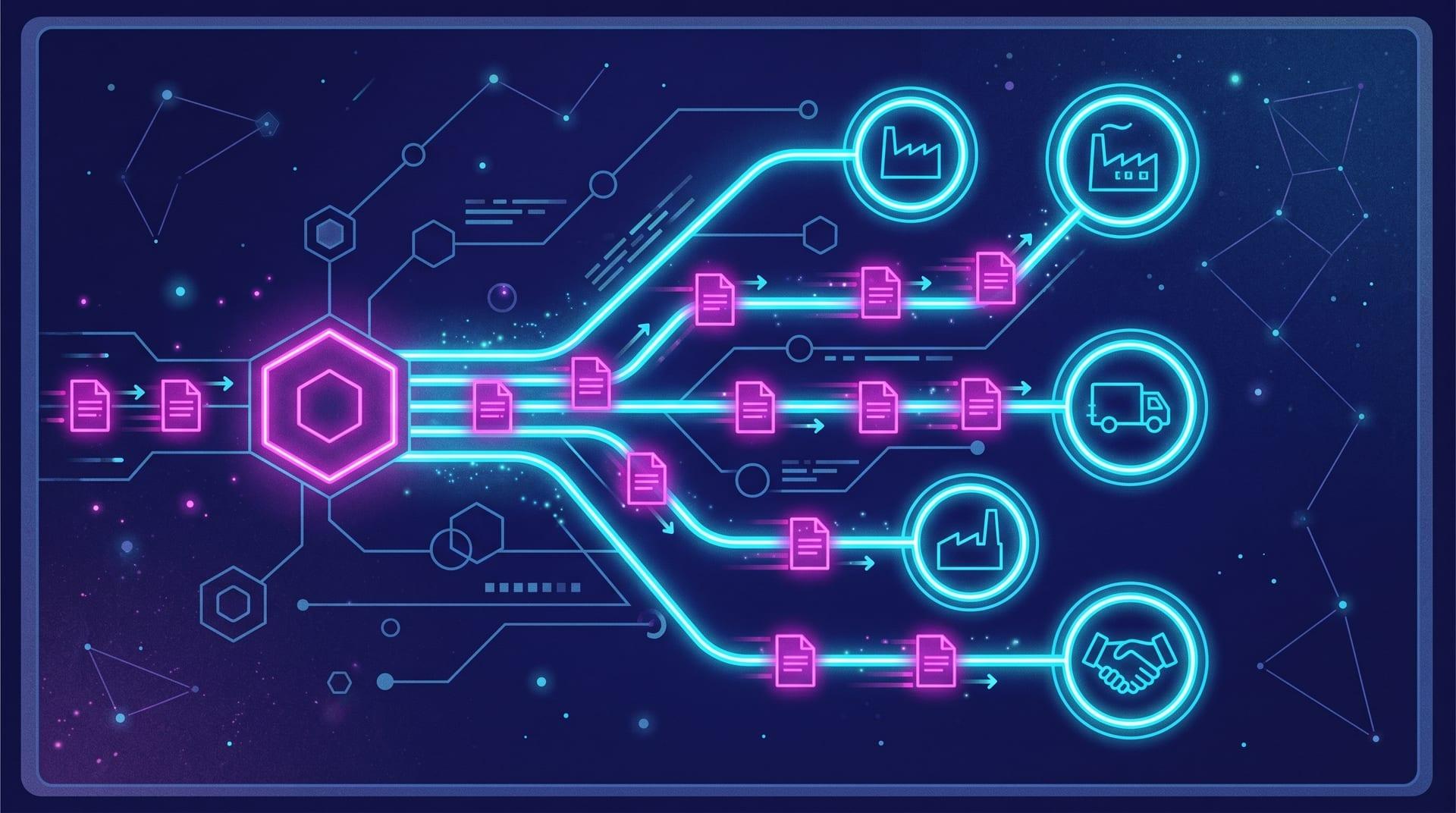
    Email / SFTP / folder watcher → OCR (Tesseract / Azure DI) → LLM extraction → ERP API. Failed cases routed to human review.

Compliance

  • GDPR

    Personal data is processed only on a documented legal basis. Data minimisation, purpose limitation, and audit trail enforced by design.

  • EU AI Act

    Risk-based classification of every AI use case (minimal / limited / high risk). Mandatory transparency, human oversight, and CE-style conformity for high-risk systems.

  • NIS2

    In essential and important sectors AI must follow security-by-design: access control, logging, incident reporting, supply-chain risk for any model provider.

  • ISO 27001 / SOC 2

    When required: ISO 27001 / SOC 2-aligned controls, including key management, RBAC, audit, vulnerability management.

Local / on-prem deployment

  • Ollama / llama.cpp

    Open-weight models (Llama 3.x, Mistral, Qwen, Gemma) running on your own GPU server or even CPU. Zero data sent to third parties.

  • vLLM / TGI

    Production-grade inference servers for self-hosted endpoints. Concurrent users, streaming, function calling supported.

  • Sovereign cloud

    For organisations without on-prem GPU: deployment on EU / Hungarian sovereign cloud (e.g. dedicated tenant), with data residency contracts.

  • Hybrid

    Sensitive content always local; for non-sensitive batch tasks frontier models (Claude, GPT) via DPA-backed API where allowed.

Data security model

  • No training on your data

    Whether self-hosted or vendor API, we contractually exclude your data from any training set.

  • PII redaction before prompt

    Automatic PII detection and masking before any prompt leaves your perimeter - pseudonymisation as a hard rule.

  • Per-role access

    Every AI surface uses your existing IAM (Entra ID / Keycloak / Okta) - the AI only sees what the user is allowed to see.

  • Full audit

    Every prompt, response, and tool call logged with user, time, and source - replayable on demand.

How it connects

An ERP is never an island - every serious rollout ships with integrations and adjacent systems.

A custom CRM ties customers, deals, and history into the ERP - one data flow from lead to invoice. On the warehouse side, a WMS warehouse system keeps stock and put-aways in real-time sync.

For manufacturers, a MES / SCADA system is wired in alongside the ERP so the shop floor data flows up. The integration plumbing is delivered as a system integration project - ERP ↔ CRM ↔ shop ↔ banking via a custom Python integration layer.

Repetitive admin (invoice processing, approval flows, document extraction) is replaced by process automation on Python + LangChain. When the ERP is part of a wider digital transformation, the roadmap is sequenced together.

Contact

Get in Touch

Tell us about your project and we'll respond within 24 hours!

Additional details (optional)

Thank you! We'll get back to you soon.

We usually respond within 24 hours.

CEO

Boncz Balint

Office

Budapest, Hungary

Let's Talk Live!

Book a free 30-minute consultation where we discuss the details of your project.

Book a Call