AppForge Solution - Webfejlesztés, Appfejlesztés, MI Fejlesztés
Guide 2026 · SMBs and enterprise

Digital Transformation 2026 - The Guide

What digital transformation actually means, how to start as an SMB or enterprise, which technologies to use (AI, ERP, automation, cloud), and what it costs. Step by step - with real ROI numbers and the typical myths debunked.

Trusted Partners

Proud to work with leading companies

6 phases

How a digital transformation plays out - 6 phases

It doesn't start with a big bang. It starts with a smart audit and a 12-36 month roadmap. AI comes last - by then data and processes are in order.

01

Audit & assessment

Where you stand today: which systems you use, where the manual work is, where the data gaps are. Process maps, gap analysis, priorities.

02

Strategy & roadmap

12-36 month digital roadmap with budget, ROI forecast, KPIs. Not generic recommendations - a sequenced action plan tailored to your numbers.

03

Quick wins (1-3 months)

First the low-cost, fast-payback items: website / e-commerce refresh, basic automation (Zapier / Make / n8n), CRM rollout, e-invoicing automation.

04

Deep transformation (3-12 months)

Custom ERP development or system replacements, AI integration, BI dashboards, document processing automation, RAG knowledge base for your corporate knowledge.

05

AI layer (continuous)

AI is the last layer - the data and the processes need to be in order first, then come AI agents, predictive models, intelligent document processing.

06

Measure & iterate (continuous)

Quarterly audit: what worked, what didn't, what's next. Digital transformation is not a project, it's a process - never finished.

6 pillars

The 6 technology pillars of digital transformation

Together they form the full picture. None stands alone, and the order matters - they build from the bottom up.
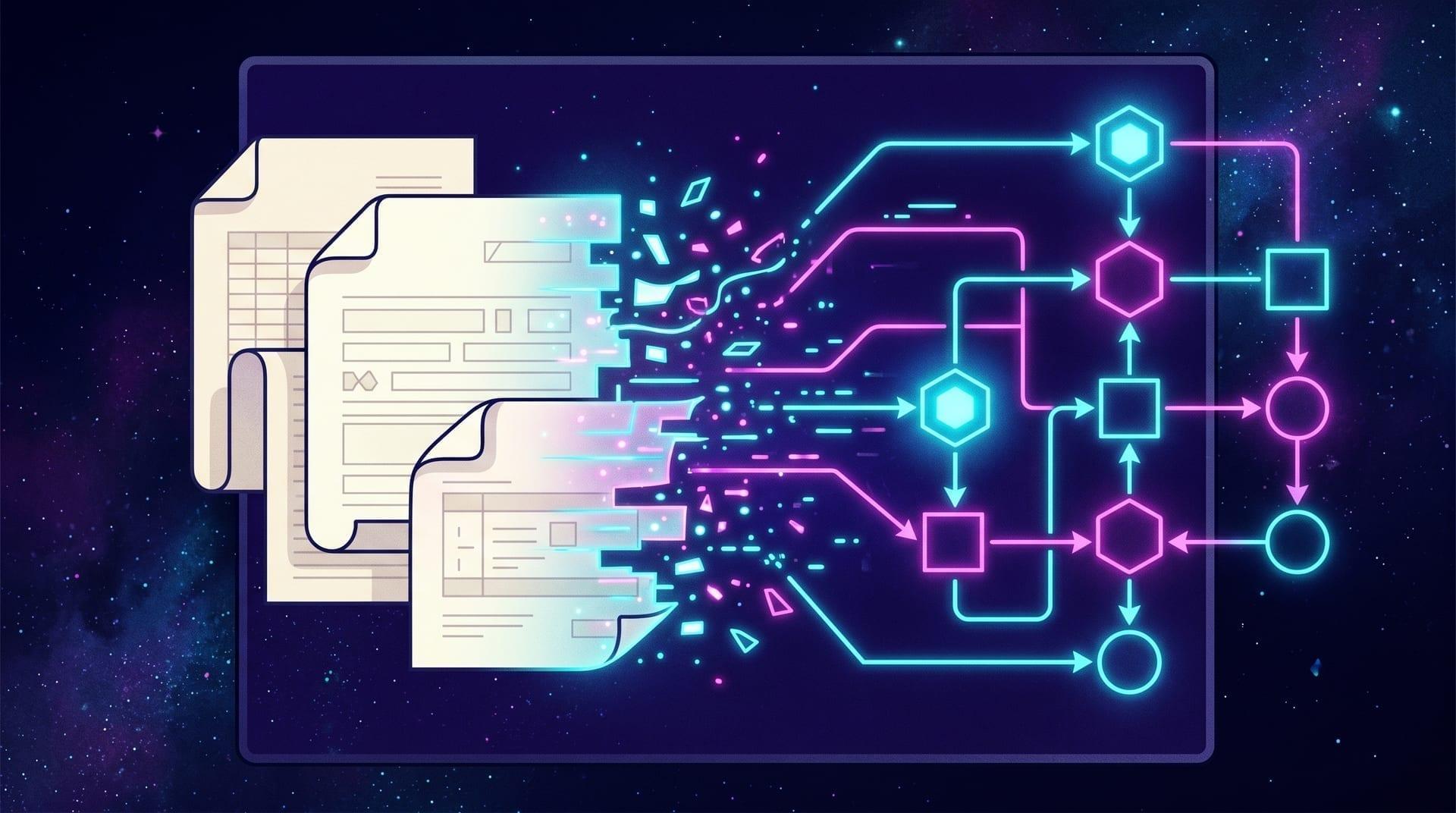
Process digitisation

Migrating paper / Excel / email-based processes into digital systems. Typical elements: document management, e-signature, workflow engine, mobile apps for field work.

Process automation →
Data consolidation & BI

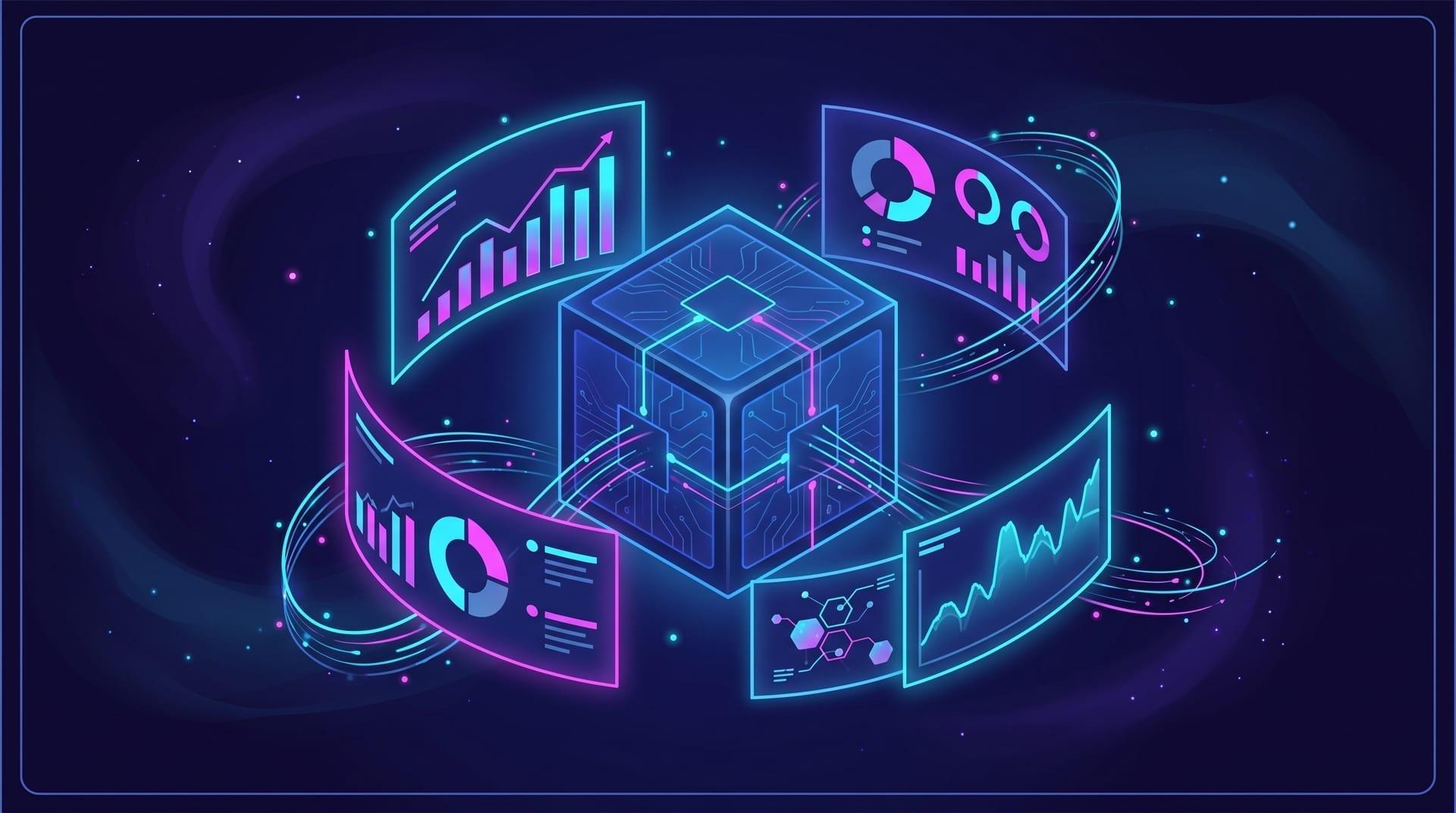
Single source of truth. Data lives in one place; you see real-time KPIs on BI dashboards (Power BI, Metabase, Looker). ERP, CRM, e-commerce, accounting - one system.

Custom ERP development →

Customer experience digitisation

Modern website, B2B customer portal, self-service ordering, real-time pricing, chatbot support. Your customers expect 24/7 access - not 9-5 email tag.

Corporate website development →

AI & machine learning

The most valuable layer - but only after the previous three are in place. AI agents, predictive models, intelligent document processing, RAG knowledge base. GDPR + EU AI Act compliant.

AI development →
Cloud & infrastructure

From on-prem to cloud (or hybrid) - Cloudflare, AWS, Hetzner, or sovereign EU data centers. Scalability, automated backups, disaster recovery, cost optimisation.

Web development →

Cybersecurity & compliance

GDPR, NIS2 (mandatory for medium/large companies in the EU since 2024). SSO, MFA, audit logging, penetration testing, incident response. Not optional.

Security →
How We Work

Our Process

Meticulous planning, seamless execution, and creative problem-solving -- that's how we achieve remarkable results.

01

Concept

No cookie-cutter solutions here. We map out your business goals, market landscape, and competition, then build a strategy designed to deliver measurable results.

02

Design

Wireframes, prototypes, and UI/UX designs built on real user insights. Every click, every layout is engineered to maximize conversions and engagement.

03

Development

Agile development with cutting-edge technologies, weekly demos, and full transparency. You'll always know exactly where your project stands.

04

Testing

Automated and manual testing across every platform and browser. Nothing goes live until it's been tested to the breaking point and passed with flying colors.

05

Launch & Support

Launch day is just the beginning. Monitoring, performance optimization, and ongoing support ensure your solution gets better every single day.

Myth-busting

5 myths about digital transformation

"Digital transformation = a new website."

Wrong. The new website is 10% of it. The 90% is rethinking internal processes, data, and culture.

"Only for large enterprises."

Quite the opposite. A 5-person company can run a full digital transformation in 2-3 months; a 5,000-person company takes 5+ years. SMBs have the advantage: they can change faster.

"Expensive and risky."

Not transforming is the expensive option. An average SMB loses 15-25% efficiency annually due to digital lag. Typical ROI: 6-18 months.

"Start with AI."

End with AI. First fix the data, processes, integrations - then AI. AI on bad data just makes bad decisions faster.

"Roll out a tool and you're done."

Digital transformation is 30% technology, 70% culture change. Training, communication, internal champions - that's the hard part.

FAQ

Digital transformation - Frequently Asked Questions

What is digital transformation?

Digital transformation is the redesign of how a company operates using digital technology - not just rolling out new software, but rethinking processes, data, customer relationships, and culture. Typical elements: replacing paper processes with digital workflows, consolidating data on a unified platform (ERP), digitising the customer experience (modern site, customer portal), automation (RPA, AI), cloud infrastructure. For an SMB, typical scope is 6-24 months, €25-260k investment, with ROI in 6-18 months.

How do I start a digital transformation?

Step by step: (1) AUDIT - assess where you are now. (2) STRATEGY - 12-36 month roadmap with budget and KPIs. (3) QUICK WINS - fast-ROI items (CRM, e-invoicing automation, basic workflows). (4) DEEPER INVESTMENTS - custom ERP, AI, BI dashboards. (5) AI LAYER - only after data and processes are in order. Never start with AI - it just makes bad decisions faster on bad data.

How much does digital transformation cost for SMBs?

For SMBs (10-100 employees), typical cost is €25-130k over 12-24 months, in stages. The cost breaks into 4 buckets: strategy + audit (€2-8k), custom software development (€13-80k, usually ERP / business management), process automation and integrations (€5-20k), training and change management (€2-13k). Larger companies (100+ employees) typically run €130k–€1.3M over 2-5 years.

How long until digital transformation pays back?

ROI varies by project type but typically: workflow / document automation 3-6 months, CRM rollout 6-9 months, custom ERP 9-18 months, AI integration 6-24 months. ROI sources: human time savings (typically 20-40%), error reduction (5-15% revenue uplift), faster decisions, customer satisfaction. For a typical SMB, full ROI within 6-18 months.

Which technologies are part of digital transformation?

Six core pillars: (1) Process digitisation - workflow engine, e-signature, document management. (2) Data consolidation - ERP / CRM / data warehouse, BI dashboards (Power BI, Metabase). (3) Customer experience - modern website, customer portal, mobile app, chatbot. (4) AI / machine learning - agents, predictive models, RAG, document processing. (5) Cloud infrastructure - Cloudflare, AWS, Hetzner, EU data centers. (6) Cybersecurity - GDPR, NIS2, SSO, MFA, audit.

What's the difference between digitisation and digital transformation?

Digitisation = moving paper / Excel processes into digital tools (e.g., Excel → proper ERP, e-signature instead of paper). Simple 'do this digitally' approach. Digital transformation = rethinking the entire business model, processes, and culture around digital possibilities. Not just 'paper to digital' but 'how would your company work if you designed it from the ground up to be digital'? Digital transformation includes digitisation plus strategic-level changes.

Do I need an external partner or can I do it in-house?

In-house works if you have at least one experienced CTO + 3-5 developers, and the transformation is the top priority for 2 years. An external partner is typically faster and cheaper - an agency that has shipped 10-50 similar projects knows the pitfalls. The most effective approach is hybrid: internal "digital lead" + external development partner. That's how we work with most of our clients - internal champion drives change, we handle development.

NIS2, GDPR - what does this mean for digital transformation?

GDPR (since 2018) regulates data handling. NIS2 (mandatory for medium/large companies in the EU from 2024) regulates cybersecurity. Both are core to digital transformation - every new system must build in privacy by design, data handling fundamentals, incident response, security monitoring. Not optional - GDPR/NIS2 violations can incur fines up to €10M or 2% of annual revenue. We bake compliance into every project by default.
AI capabilities

How AI fits into this solution

What AI can do, how to integrate it, what to comply with - and how to keep your data on-prem.

What AI can do here

  • AI maturity audit

    AI analyses process documents, systems, and tools - lists where intervention pays off.

  • Process mining

    From log data AI uncovers actual processes (not what the SOP claims) - gaps and workarounds become visible.

  • Knowledge base construction

    Wiki / SharePoint / email archive AI-indexed plus RAG - knowledge searchable from one place.

How we integrate it

  • 6-pillar AI strategy

    Data → models → integration → governance → human capability → measurement. Each pillar with a concrete action plan.

  • AI policy

    Internal policy under EU AI Act + GDPR + NIS2: which department may use what, for what, with which data.

Compliance

  • GDPR

    Personal data is processed only on a documented legal basis. Data minimisation, purpose limitation, and audit trail enforced by design.

  • EU AI Act

    Risk-based classification of every AI use case (minimal / limited / high risk). Mandatory transparency, human oversight, and CE-style conformity for high-risk systems.

  • NIS2

    In essential and important sectors AI must follow security-by-design: access control, logging, incident reporting, supply-chain risk for any model provider.

  • ISO 27001 / SOC 2

    When required: ISO 27001 / SOC 2-aligned controls, including key management, RBAC, audit, vulnerability management.

Local / on-prem deployment

  • Ollama / llama.cpp

    Open-weight models (Llama 3.x, Mistral, Qwen, Gemma) running on your own GPU server or even CPU. Zero data sent to third parties.

  • vLLM / TGI

    Production-grade inference servers for self-hosted endpoints. Concurrent users, streaming, function calling supported.

  • Sovereign cloud

    For organisations without on-prem GPU: deployment on EU / Hungarian sovereign cloud (e.g. dedicated tenant), with data residency contracts.

  • Hybrid

    Sensitive content always local; for non-sensitive batch tasks frontier models (Claude, GPT) via DPA-backed API where allowed.

Data security model

  • No training on your data

    Whether self-hosted or vendor API, we contractually exclude your data from any training set.

  • PII redaction before prompt

    Automatic PII detection and masking before any prompt leaves your perimeter - pseudonymisation as a hard rule.

  • Per-role access

    Every AI surface uses your existing IAM (Entra ID / Keycloak / Okta) - the AI only sees what the user is allowed to see.

  • Full audit

    Every prompt, response, and tool call logged with user, time, and source - replayable on demand.

How it connects

The pillars are not abstract concepts - each is a concrete deliverable detailed on its own landing.

The enterprise systems pillar: custom ERP and custom CRM, connected by a system integration project. This is where the single source of truth is built.

The logistics and manufacturing pillar: WMS warehouse system and MES / SCADA system. The process pillar is covered by Python + LangChain process automation, the cyber pillar by NIS2 compliance programme.

Contact

Get in Touch

Tell us about your project and we'll respond within 24 hours!

Additional details (optional)

Thank you! We'll get back to you soon.

We usually respond within 24 hours.

CEO

Boncz Balint

Office

Budapest, Hungary

Let's Talk Live!

Book a free 30-minute consultation where we discuss the details of your project.

Book a Call